
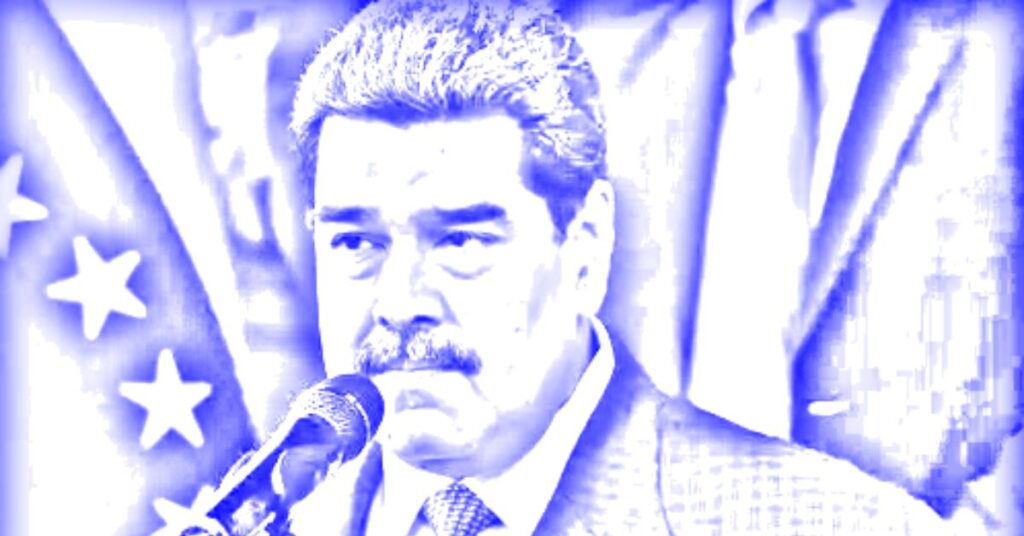
Nicolás Maduro: Venezuela’s story is the ultimate cautionary tale of “Dutch Disease.” The state became so blinded by its mono-extractivist wealth that its institutions eroded into a fragile shell, leaving it vulnerable to the very external intervention that finally tipped the balance. The capture of a president is a headline, but it does not repair a society where the minimum wage has withered to $4 a month.Nicolás Maduro
From “Socialism” to Extraction: 5 Surprising Realities Behind the Venezuelan Rupture
Nicolás Maduro Really a Hero For Venezuela
I was raised in a system defined by its grim abundance of certainty: the Soviet Union. In that world, one could predict the trajectory of a life with mathematical precision, governed by stable laws and unchanging rules. Today, we have plunged into an age of Quantum Politics, where predictability has dissolved into probabilistic outcomes and observation itself alters reality.
Nothing illustrates this rupture more than the seismic event of January 3, 2026: the capture and extraction of Nicolás Maduro by U.S. special forces. Faced with charges of narco-terrorism against the United States and its citizens, Maduro’s removal marked the ultimate collapse of a state where alliances were fluid and norms lay in ashes. To understand this moment, we must look past the noise of partisan rhetoric to the structural failures that made such an intervention possible.
The Paradox of Political Will: When 375,000 Houses Aren’t Enough
The Great Housing Mission (GMVV) is often cited by the regime as its crowning achievement. On the surface, the data is impressive; the mission demonstrated that political will could drive performance, reporting the delivery of 375,000 homes in its first two years. Yet, this success was a veneer for institutional fragility and a lack of transparent monitoring.Nicolás Maduro
The reality, according to PROVEA, is far more sobering. Despite the propaganda, the government of Hugo Chávez actually ranks in second place on the list of presidents who built the fewest houses since the democratic period began in 1958. The mission was less about shelter and more about Social Control, using the threat of eviction or dismissal to enforce political loyalty.Nicolás Maduro
“There are various expressions of political discrimination of GMVV beneficiaries, which include the statements of Minister Ricardo Molina to dismiss workers of the Ministry of Popular Power for Housing and Habitat participating in opposition political parties.” — PROVEA
The “Debt” Written in Gold and Coal: Sacrificed Indigenous Sovereignty
While the administration draped itself in revolutionary rhetoric, its true priority was high-stakes extraction at the expense of its most vulnerable citizens. In the Sierra de Perijá and the state of Bolivar, the state nationalized wealth while granting sweeping concessions to transnationals. Most notably, a contract was signed with the Chinese state Citic Group to develop the Las Cristinas mine, one of the world’s largest gold reserves.
This predatory expansion led to the criminalization of indigenous leaders like Sabino Romero, who demanded that the Yukpa people be tried under their own ancestral laws. To delegitimize these protests, the state pioneered a cynical legal theory, claiming activists were using their own children as human shields. The impacts of this “revolutionary” extraction include:Nicolás Maduro
- Ecosystem Damage: Permanent destruction of water reservoirs and forests caused by the coal industry and unregulated gold mining.
- Loss of Ancestral Land Titles: Systematic exclusion of the Yukpa, Wayuu, and Pemon peoples from the constitutional demarcation process.
- The “Human Shield” Legal Precedent: The use of child welfare laws as a pretext to criminalize and discredit ancestral land protests.
The Predatory Pivot: Maduro’s “Inter-Bourgeois Pact”
By his 2025 inauguration, the mask of “Socialism of the 21st Century” had slipped entirely. Maduro used his address to explicitly invite the capitalist class to “count on him,” engineering what analysts call an “inter-bourgeois pact”. This alliance unified the traditional business elite represented by Fedecámaras with the new, state-aligned Bolivarian bourgeoisie.Nicolás Maduro
The irony of the “Worker President” reached its peak when his administration effectively outlawed the right to strike and dismantled labor protections to court private capital. While elites profited, the currency system became a vehicle for staggering corruption; officials estimate that $300 billion was siphoned through CADIVI shell companies. Today, despite this pivot toward capital, 90% of the population survives below the poverty line.
The Sanctions Trap: A Case of Collective Punishment
UN Special Rapporteur Alena Douhan has documented how international pressure evolved into a form of collective punishment. While intended to target individuals, “sectoral” blocks on oil and mining devastated public health and nutrition. The situation was exacerbated by the “Over-compliance” of fearful global banks, which created a financial blockade that even humanitarian exemptions could not breach.
The human cost is measured in a 73% drop in food imports and a public health catastrophe where 2.6 million children missed vital vaccines. Simultaneously, the regime’s international assistance programs faced their own scandals.Nicolás Maduro
“Seven Cuban doctors who defected… introduced an indictment against the governments of Cuba and Venezuela… for what they considered was a conspiracy to force them to work under conditions of ‘modern slaves’ as payment for the Cuban government’s debt.” — Wikipedia
The 2026 Rupture: An “Externally Directed” Transition?
The extraction of Maduro on January 3, 2026, launched an “Externally Directed” Transition that left the country in legal limbo. In the vacuum, Delcy Rodríguez assumed power via emergency decree, an act viewed by the U.S. and UK as the rise of an interim and illegitimate authority. This crisis has turned Articles 333 and 350 of the Constitution into the ultimate pivot point, as they mandate the “duty of citizens to work toward the restoration of constitutional order.”
Removing a leader, however, does not solve the institutional decay of a “mafia state.” Evaluation of this transition suggests that a true rupture requires four essential pillars:
- Restoring Popular Sovereignty: Moving past illegitimate interim decrees toward a transparent, consultative government.
- Centering Human Rights: Halting extrajudicial killings and releasing the hundreds of political prisoners currently held by the regime.
- Restoring the Rule of Law: Appointing an independent judiciary to end the era of Constitutional Authoritarian Populism.
- Addressing State Fragility: Reclaiming territorial control from irregular armed groups and the “mafia” interests currently occupying the Orinoco Mining Arc.
Conclusion: Beyond the Extraction
Venezuela’s story is the ultimate cautionary tale of “Dutch Disease.” The state became so blinded by its mono-extractivist wealth that its institutions eroded into a fragile shell, leaving it vulnerable to the very external intervention that finally tipped the balance. The capture of a president is a headline, but it does not repair a society where the minimum wage has withered to $4 a month.Nicolás Maduro
We are left to wonder if democracy can truly be “exported” through military strikes and legal ambiguities. Or must it be rebuilt, brick by brick, by the civil society that survived the extraction? Only when the Venezuelan people reclaim their own sovereignty will the quantum uncertainty of this age finally settle into a lasting peace.Nicolás Maduro
| Charlie Kirk Assassinated: Conservative Activist Charlie Kirk Assassinated, Nationwide Manhunt Underway | Read More |
| Breaking News Global Dalliance News | Read More |